
When choosing glazing for aluminium windows, bifold doors or sliding doors, the type of glass can have a significant impact on comfort, energy efficiency and the amount of heat entering your property. Two commonly discussed options are solar control glass and Low-E glass.
Although both can improve the performance of modern glazing, they are designed to address different priorities. Understanding the difference can help you choose the right glazing specification for your home or commercial property.
What Is Solar Control Glass?
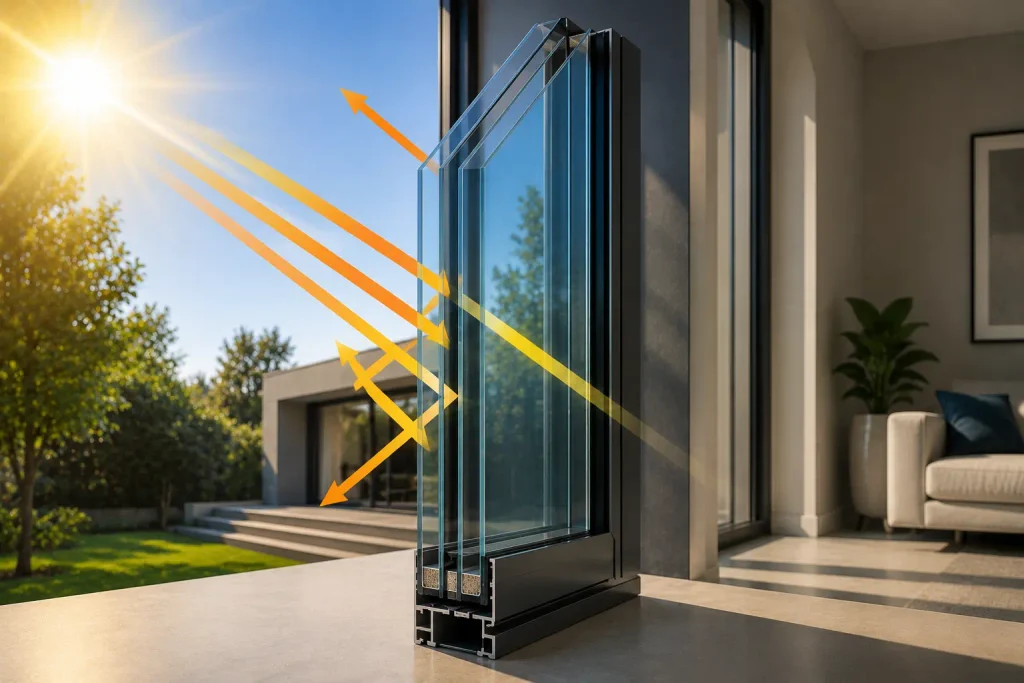
Solar control glass is designed to reduce the amount of solar heat entering a building through the glazing while still allowing natural daylight into the room.
It typically uses a special coating that reflects or filters part of the sun’s energy. This can be particularly useful for properties with large areas of glazing, such as those with aluminium bifold doors, sliding doors, roof glazing or large windows.
Solar control glass can help:
- Reduce unwanted solar heat gain
- Improve indoor comfort during warmer weather
- Reduce glare from direct sunlight
- Maintain good levels of natural daylight
- Improve the performance of large glazed areas
For homes with extensive south-facing or west-facing glazing, solar control glass can be particularly worth considering.
What Is Low-E Glass?
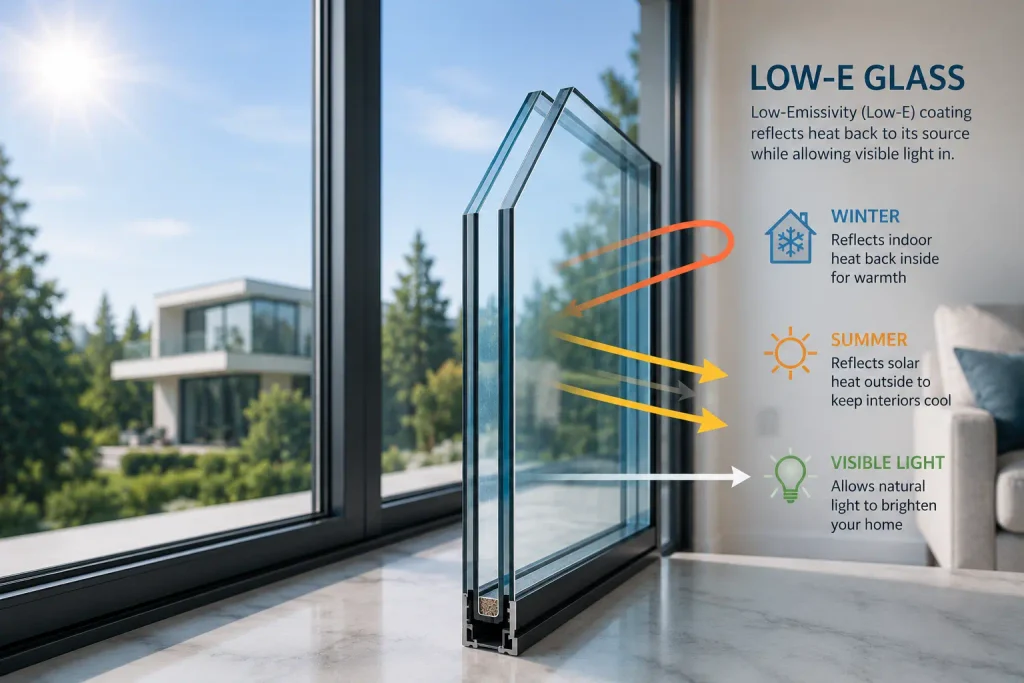
Low-E stands for low emissivity. Low-E glass has a microscopically thin coating designed primarily to improve the thermal performance of the glazing.
The coating helps reduce the amount of heat that escapes through the glass, allowing more warmth to remain inside during colder weather.
Low-E glass can therefore help improve:
- Thermal insulation
- Indoor comfort
- Energy efficiency
- Heat retention during colder months
Low-E coatings are widely used in modern double- and triple-glazed units.
Solar Control Glass vs Low-E Glass
The main difference is the type of heat transfer they are designed to control.
Solar control glass primarily helps control heat coming into the property from the sun.
Low-E glass primarily helps reduce heat being transferred out of the property.
However, the distinction isn’t always completely straightforward. Modern high-performance glazing can combine different coating technologies to provide a balance of solar control and thermal insulation.
Simple comparison
| Feature | Solar Control Glass | Low-E Glass |
|---|---|---|
| Main purpose | Controls solar heat gain | Reduces heat loss |
| Helps reduce overheating | ✅ | Depends on specification |
| Improves thermal insulation | Can contribute | ✅ |
| Controls solar radiation | ✅ | Depends on coating |
| Helps retain indoor heat | Depends on specification | ✅ |
| Suitable for large glazing | ✅ | ✅ |
The actual performance depends on the specific glass product, coating, glazing configuration and installation.
Which Is Better for Aluminium Windows?
There isn’t one glazing type that is automatically best for every property.
The right option depends on factors such as:
- Window orientation
- Size of the glazed area
- Amount of direct sunlight
- Property location
- Desired thermal performance
- Risk of overheating
- Level of natural daylight required
- Double or triple glazing configuration
For example, a property with large south-facing aluminium windows may benefit from solar control glazing to help manage solar heat gain.
A property where retaining internal heat is the main priority may place greater emphasis on Low-E performance.
In some cases, a carefully selected glazing unit can provide both thermal insulation and solar-control performance.
For More Details Information Book Free Consultation with Durajoin.
Solar Control Glass for Aluminium Bifold Doors
Large aluminium bifold doors can introduce significant amounts of sunlight into a room. While this creates bright, attractive interiors, extensive glazing can also increase solar heat gain during sunny periods.
Solar control glass can help manage this heat while maintaining natural daylight.
This can make it an option worth considering for:
- Home extensions
- Open-plan kitchens
- Rear extensions
- Garden rooms
- Large living spaces
- South-facing elevations
The best specification should be selected according to the property’s orientation, glazing size and performance requirements.
Solar Control Glass for Aluminium Sliding Doors
Aluminium sliding doors can also feature large expanses of glass. This makes the glazing specification particularly important.
Solar control glass can help reduce unwanted solar heat entering through the doors while maintaining a bright connection between the interior and exterior.
For properties with large sliding door openings, your glazing specialist can assess the project and recommend an appropriate glass specification.
Can Solar Control and Low-E Technologies Be Combined?
In some glazing configurations, solar-control and low-emissivity technologies can be incorporated into the overall glazing specification.
This can provide a balance between:
- Reducing unwanted solar heat gain
- Limiting heat loss
- Maintaining natural daylight
- Improving year-round comfort
However, the performance of a glazing unit depends on the exact glass combination rather than simply choosing a label such as “solar control” or “Low-E”.
This is why the whole glazing specification should be considered when choosing glass for aluminium windows and doors.
What About Glare and UV Protection?
Solar control glass can also help manage excessive sunlight and glare, which can be particularly useful where large windows or glazed doors receive direct sunlight.
Depending on the specific glass product and coating, glazing can also provide a level of UV filtering.
However, UV performance varies between products, so it is important to check the manufacturer’s technical specifications rather than assuming that all solar-control glass provides the same level of UV protection.
Which Glass Should You Choose?
The best choice depends on your property and how you want the glazing to perform.
Solar control glass may be worth considering if:
- Your rooms receive strong direct sunlight
- You have large areas of glazing
- Overheating is a concern
- You want to reduce solar heat gain
- Glare is an issue
Low-E glass may be particularly suitable if:
- Thermal insulation is a priority
- You want to reduce heat loss
- You are upgrading older glazing
- You want improved year-round energy performance
For many modern aluminium window and door projects, the best solution isn’t simply choosing one type over another. A professional glazing specification can balance thermal insulation, solar control, daylight and comfort according to the property.
Choosing the Right Glass for Aluminium Windows and Doors
When selecting glazing, consider more than just the name of the glass.
Important performance characteristics can include:
- U-value – indicates thermal insulation performance
- g-value – indicates the amount of solar energy transmitted through the glazing
- Light transmission (LT) – indicates how much visible light passes through
- Glare performance
- UV transmission
- Glazing configuration
- Double or triple glazing
These specifications help determine how the glazing will perform in your particular property.
Solar Control Glass or Low-E Glass: Which Is Right for You?
Solar control glass and Low-E glass serve different primary purposes, but both can play an important role in high-performance aluminium glazing.
If your main concern is solar heat gain and overheating, solar control glass may be worth considering.
If your main concern is heat retention and thermal insulation, Low-E glazing can be an important part of the specification.
For large aluminium windows, bifold doors and sliding doors, the best solution should take into account the property’s orientation, glazing area and overall performance requirements.
Upgrade Your Aluminium Windows and Doors with the Right Glazing
At Durajoin, we manufacture, supply and install bespoke aluminium windows and doors across London. Our range includes aluminium windows, bifold doors, sliding doors and entrance doors, with glazing options selected to suit the requirements of each project.
Whether you’re replacing existing windows, planning a home extension or installing large glazed doors, choosing the right glass can make an important difference to comfort and performance.
Looking for bespoke aluminium windows and doors in London? Get in touch with Durajoin to discuss your project and request a quote.

2 responses to “Solar Control Glass vs Low-E Glass: What’s the Difference?”
Should I choose solar control glass or Low-E glass for my home? Which one is better?
The choice depends on your property’s requirements. Solar control glass may be more suitable where overheating and solar heat gain are concerns, while Low-E glazing may be preferred where reducing heat loss is the main priority. Solar control glass can be particularly useful for reducing solar heat gain and overheating, while Low-E glass can help improve thermal insulation.